
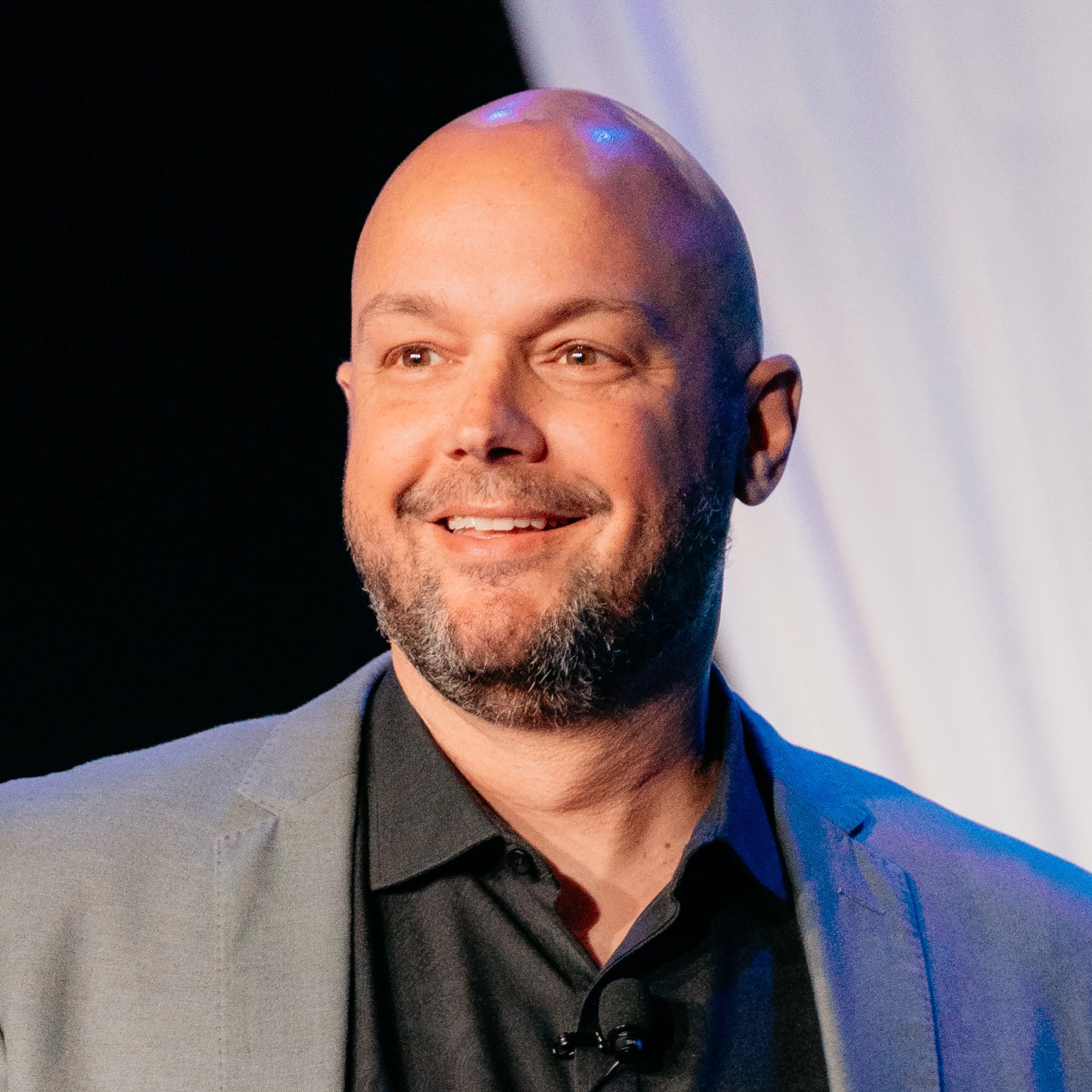
This interview is with Mike Montague, Founder, Avenue9.
What key experiences moved you from sales and customer service training into leading Human‑First AI Marketing, and how did those moments shape your approach to digital strategy today?
I started my career in internet marketing, which has undergone many transformations over the last 20 years. I moved from website design to social media, to content marketing, to strategic partnerships, and influencer relationships. Then, when AI emerged, I realized that I could use all of those digital marketing skills and strategies to help small businesses market like the big brands I had worked for, at a reasonable price, speed, and quality.
Building on that, how can a small business apply your Human + AI Capability Map this quarter to prioritize marketing work for fast wins while avoiding common missteps you’ve seen?
In the past, great leadership was about choosing the right person for the job, but now, future work is about mapping work to the capabilities of humans + AI and choosing the right process.
Most teams adopt AI backward. They start with tools. They automate tasks without understanding how much they matter or whether those tasks should be done in the first place. They hand AI responsibilities without clarifying ownership, judgment, or quality standards. They believe the marketing hype and don’t pause to think critically about the work.
The Human + AI Capability Map is simple by design and modeled after the Johari Window, a psychological tool developed in 1955 that boosts self-awareness and interpersonal communication by mapping information known/unknown to oneself and others.
The map forces leaders to stop arguing about AI in the abstract future and start making explicit decisions about what work can and should be done right now.
The framework maps work across two dimensions:
- Human capability
- AI capability
Each runs from low to high in terms of talent and skill required.
When you rate the current capabilities of your team and tech and then plot real tasks on this map, patterns emerge quickly. You see where humans should lead, where AI should take over, where collaboration creates leverage, and where work should be eliminated or postponed entirely.
Once you see how this works, you cannot unsee it. You will notice that AI is not replacing humans as its capabilities grow; it is simply increasing the amount of work that should be done with humans + AI. As you increase your team’s and tech’s capacity, the number of things your organization cannot do shrinks dramatically.
Marketing is the canary in the coal mine.
Marketing feels the pains of this AI revolution first because it sits at the intersection of creativity, data, technology, and trust. When marketing teams misuse AI, the damage is visible:
- Generic content
- Hollow messaging
- Brand erosion
When they use AI well, the opposite happens:
- Stronger thinking
- More consistency
- More human work, not less
That is why marketing is often the best place to pilot the Human + AI Capability Map™. The lessons transfer quickly to sales, operations, finance, customer success, and leadership itself.
Once leaders map marketing work honestly and strategically for maximum impact, they start asking better questions everywhere else.
Staying with execution, how do you translate your on‑air hosting and podcasting background into a process that amplifies a brand’s unique voice in AI‑assisted content without it sounding generic?
I interview your organization’s founder, best salesperson, top client, or strategic partners and vendors to capture the voices of your business. Then, I use the AI transcripts of those conversations to distill your message into a scalable story that we can use for marketing and even to train a custom GPT to create that marketing.
Extending voice to distribution, what AI‑supported weekly LinkedIn routine have you seen help B2B founders compound reach while keeping relationship-building distinctly human?
I use AI to capture the core conversations happening in your business, and then we create LinkedIn posts, newsletters, and more from the content you are already creating. The best content comes from video calls or interviews that we can trim down to shorts, reels, and clips for real human-led content on LinkedIn and other video-first platforms.
Bridging marketing and service, what workflow have you implemented that turns customer service conversations into reusable marketing assets without losing empathy or context?
I pull out FAQs, great answers, problem statements, persona information, and featured testimonials to use in a marketing context.
As AI usage scales, what lightweight governance practices—around prompts, approvals, and data privacy—do you put in place to protect brand trust and consistency?
At Avenue9, we keep governance lightweight, practical, and human-first. Here is how.
1. Prompt Governance: Train Before You Trust
Most teams treat prompts like sticky notes, which creates brand drift. We use Context Engineering as part of our A9Factor Framework.
We maintain:
- A shared prompt library with approved base prompts
- Brand voice and audience context embedded into every workflow
- Clear human ownership of every AI task
Rule: No publishing from a one-line prompt. If it lacks context, it lacks permission.
2. Human-Led Approvals
AI accelerates execution. Humans own direction.
We use a tiered review model:
- Required content, like newsletters and nurture emails, gets an AI draft plus a quick human trust check.
- Inspired or high-impact content requires a human-first structure and senior review before publishing.
Before anything goes live, we ask:
- Would we say this in a sales conversation?
- Would we defend this claim publicly?
- Does this build long-term trust?
If not, it gets revised.
3. Data Privacy Guardrails
Trust erodes quickly with careless AI use.
We implement:
- No sensitive raw data in open prompts
- An internal AI usage policy defining approved tools and boundaries
- Vendor transparency checks on training and retention policies
AI should amplify authenticity, not leak intellectual property.
4. Brand Consistency as Reputation
AI systems recommend brands they consistently understand.
So we codify:
- Tone and messaging pillars
- Non-negotiable claims
- Founder stories and proof points
This becomes the trunk of the Trust Tree. AI creates branches; humans protect the roots.
5. Monitor Drift Without Micromanaging
We prevent AI drift through:
- Quarterly content audits
- Prompt refinements
- Share of Model tracking for AEO visibility
Governance should feel like guardrails, not handcuffs.
For SMBs, the sweet spot is simple: clear voice documentation, approved prompts, tiered reviews, data boundaries, and human-owned strategy.
AI is the engine; humans are the sparkplug.
To cap it off, for a small-business leader ready to “get behind the mic,” what 90‑day launch plan do you recommend to turn a podcast or speaking platform into measurable pipeline?
If you’re a small business leader ready to get behind the mic, the goal is not to start a podcast. The goal is to start better conversations that turn into pipeline.
Most people launch a show and hope revenue falls out of it like a slot machine. That never works. I think about it like drilling a well. You don’t just start digging randomly. You study the land, pick the right spot, and build the plumbing before you turn on the pump.
First, get clear on the revenue target. How much pipeline do you actually want this platform to create? Work backward from average deal size and close rates. Now your show has a business purpose, not just a creative outlet.
Second, narrow the audience. Not “business owners,” not “manufacturers.” Pick a specific role with a specific problem you already know how to solve. Your podcast should feel like a private roundtable for them, not a broadcast to the world.
Third, design episodes around real buyer questions. Use sales calls as raw material. Capture the conversations you’re already having, then let AI help you organize and repurpose them. AI should amplify your thinking, not replace it. Humans set direction; AI scales execution.
Before you launch, build the conversion path. A clear landing page, one strong lead magnet, and a simple way to book a strategy call. If there’s no bridge from content to conversation, there’s no pipeline.
When you launch, invite ideal clients as guests. That changes the dynamic immediately. You’re not asking for a sales meeting; you’re inviting them into a meaningful discussion. After the episode, follow up with a thoughtful debrief. That’s where opportunities often begin.
By day ninety, you should have a dozen episodes, dozens of strategic conversations, and clear signals about which topics convert. If you don’t see pipeline forming, it’s not a production problem; it’s a strategy problem.
The mic is just the tool. The real asset is trust. And trust, when built intentionally, compounds into revenue.