
How to Build a Bicycle Community Online (That People Actually Join and Stay In)
Written by Daniel Ząbczyk
The bicycle community is a reliable space where riders feel welcome, interact regularly, and keep coming back, not about chasing numbers or elite performance. In Building a Global Online Bicycle Community for Casual Riders, the core idea is simple: start small, stay consistent, and design for belonging.
Today, platforms like Facebook Groups, Reddit, and Strava already host millions of cyclists. The opportunity isn’t reach, it’s structure. When you combine clear community guidelines, a predictable posting rhythm, and genuine engagement, even a group of 5–10 riders can grow into a trusted cycling community. This guide shows exactly how to do that, step by step.
What Makes a Bicycle Community Successful?
A bicycle community is successful when riders feel a sense of belonging and return regularly, not when it grows fast or looks impressive from the outside. For casual cyclists and semi-advanced riders, comfort and consistency matter more than speed or status.
Strong cycling communities share three fundamentals:
- Clear community identity. Members know who the group is for and what kind of riding and conversation belongs there.
- Inclusive community culture. Beginner questions, ride photos, and shared experiences are encouraged. Gatekeeping and ego are not.
- Consistent interaction. Regular posts, recurring threads, and visible moderation build community trust over time.
From my experience, engagement improves the moment expectations are explicit. When I clearly stated that a group was about everyday riding, not racing, participation increased almost immediately. People don’t join a bicycle community to compete. They join to feel welcome, supported, and part of something shared.
Which Platform Should You Start Your Bicycle Community On?
You should start your bicycle community on the platform that makes it easiest for casual riders to join and talk, which is usually a Facebook Group as your primary hub. Then use Reddit and Strava as “spokes” for discovery and habit-building.
Platform Comparison for Building a Bicycle Community
|
Platform |
Best purpose |
Strength |
Watch out for |
Best for |
|
Facebook Groups |
Main online community hub |
Fast onboarding, Events, Polls, pinned posts |
Spam without clear rules |
Most communities starting from zero |
|
Reddit (r/bicycling, r/cycling) |
Discovery and Q&A discussion |
Niche conversations, searchable threads |
Slow early growth, heavy moderation |
Topic-led advice communities |
|
Strava |
Habit-building and motivation |
Ride tracking, clubs, challenges |
Limited conversation depth |
Accountability and ride consistency |
|
Discord / Slack |
Real-time interaction |
Fast chat, strong social bonds |
Can feel noisy without structure |
Tight-knit or organizer-led groups |
|
Forums (Discourse, phpBB) |
Searchable knowledge base |
Long-form help, archives |
Higher setup effort |
Learning-focused communities |
|
Website + Newsletter |
Ownership and retention |
Google visibility, direct email reach |
Requires consistent publishing |
Long-term community growth |
How do rules, rhythm, and engagement keep a bicycle community active?
Rules, rhythm, and engagement keep a bicycle community active by creating structure without killing spontaneity. Clear community guidelines and simple onboarding tell new members what “good participation” looks like from day one.
Start with onboarding. A pinned welcome post should explain the rules, suggest a first action (post a ride photo or introduce yourself), and point to key threads. This reduces friction and increases early participation.
Next, establish a weekly content rhythm. Recurring threads remove the pressure of inventing content and give members a reason to return. Proven examples include:
- Motivation Monday for goals and encouragement
- Training Tuesday for advice and questions
- Bike Check Friday for photos and setups
Finally, prioritize user-generated content. Communities thrive when members create more posts than admins. Actively like, comment, and highlight member posts to reinforce participation.
From my experience, community only works when you treat it as people, not a channel. User-generated content matters more than polished posts. Commenting, reacting, and acknowledging members builds more trust than any content calendar. When people feel seen, they come back, and they bring others with them.
Practical takeaway: in one community I ran, engagement doubled within two weeks after introducing just two recurring threads and personally replying to every first-time post. Consistency beats complexity every time.
How do you grow and sustain a bicycle community over time?
A bicycle community grows sustainably when you seed it intentionally and prioritize retention over raw numbers. Early growth should start with 5–10 active members who post, comment, and model the behavior you want. A small but engaged core creates social proof that attracts others.
Next, use cross-promotion where cyclists already spend time. Share your community in relevant Facebook Groups, subreddits like r/bicycling or r/cycling, and platforms like YouTube or Instagram if you already have an audience. Growth is usually gradual, reaching 200 engaged members can take long months, not days, and that’s normal.
Shared experiences accelerate connection. Organize group rides, virtual meetups, or simple challenges like a monthly ride goal. Events turn usernames into relationships.
Retention matters more than scale. A focused community of 300 active riders is more valuable than 1,000 silent members. Sustainable communities are built by people who feel seen, not counted.
We are also living in an AI-first moment
Today, one person can run a community, website, and basic marketing alone. Simple design skills in Canva, good prompting in LLMs like ChatGPT, Claude, or Gemini, and openness to learning are enough. Technology lowers the barrier, but people still decide whether a community lives or dies.
Summary: What actually makes building a bicycle community work?
Building a bicycle community works when you show up consistently and care about the people, not the metrics. Clear purpose, simple rules, recurring rhythms, and genuine engagement matter more than platforms or growth hacks. Communities succeed because members feel welcome, heard, and motivated to participate.
Start small, launch imperfectly, and improve in public. Invite a few riders, post regularly, and learn what your members respond to. If you want to build something that lasts, begin today, create the space you wish existed and let the community grow with you.
Build it for people first. Tools change, platforms rise and fall, but human connection is the only thing that scales long-term.
Author byline: Written by Daniel Ząbczyk, founder of CzerwonyRower.pl and Head of SEO at Chilli Fruit, specializing in digital visibility, link building, and community-driven growth.
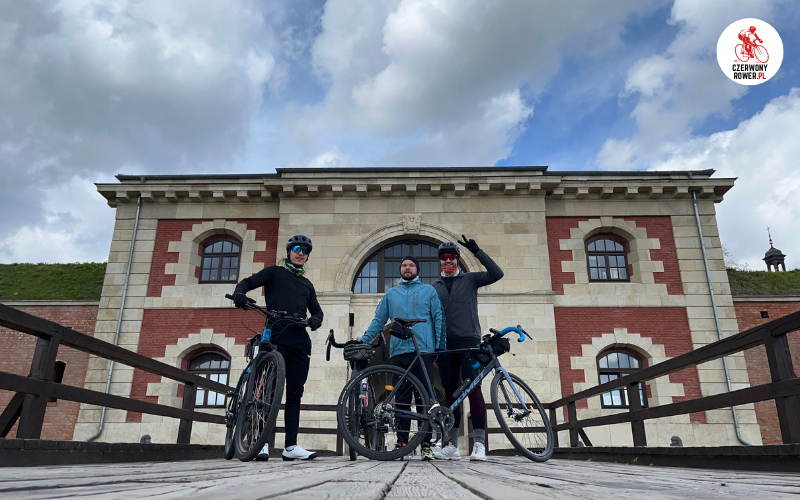
Image Source: Czerwonyrower.pl