
How can I introduce an adopted pet to my other pets?
Bringing a new pet into a home with existing animals requires careful planning and patience. This article offers expert-backed strategies for smoothly integrating adopted pets with your current furry family members. Learn practical tips and techniques to create a harmonious multi-pet household, ensuring a positive experience for all animals involved.
- Parallel Walks Foster Gradual Pet Introductions
- Slow Progression Ensures Calm Pet Coexistence
- Strategic Steps for Harmonious Multi-Pet Households
- Controlled Introductions Build Pet Relationships Gradually
Parallel Walks Foster Gradual Pet Introductions
When I introduced Kaali, our adopted dog, to Rusty, my older companion, I learned that no checklist can replace patience and observation. Instead of putting them together right away, we started with simple parallel walks in a nearby park. This allowed both dogs to get used to each other’s scents and energy without the stress of direct interaction.
On their first meeting at home, I kept things calm and brief. Both dogs were on leashes, but I gave them room to move and explore at their own pace. I noticed Rusty’s relaxed attitude helped Kaali feel more comfortable, so I let their body language lead the way. If either seemed uncomfortable, we took a break and tried again later.
For those first few days, I made sure their routines didn’t clash. Meals were served separately, toys and beds stayed with their usual owners, and both had their own space to retreat when needed. I didn’t expect them to be best friends overnight, but just quiet tolerance was enough. Rusty set clear boundaries with Kaali, and I trusted him to do it without interference, stepping in only if things got tense.
Another thing I found valuable was giving Rusty extra attention during car rides, treats, and moments together in our old familiar spots. This helped him feel secure and showed Kaali that joining our family didn’t mean competing for affection.
So, what worked for us? Take your time. Small, positive steps count much more than forced interactions. It’s better to wait for true acceptance than chase instant harmony. Watch your pets, trust their signals, and don’t push when patience works better. Celebrate those little wins: a shared nap, a quiet meal in the same room, and you’ll find the real story of pets bonding is about creating trust, not manufacturing friendship.
 Abhishek Joshi
Digital Marketer, Dog with Blog
Slow Progression Ensures Calm Pet Coexistence
My best advice is to proceed more slowly than you think you should. The goal is not friendship, but rather for everyone to remain calm. Friendship may develop later if you handle this correctly. Measure progress by how uneventful the interactions are.
When I introduced my rescued dog, Eulla, to my cat, Millie, in our home, here’s what I did:
1. Started with decompression, not introductions.
For the first three days, we maintained a quiet environment. Eulla had her own room, complete with a crate, a stuffed Kong, and predictable potty/walk/sleep schedules. There were no face-to-face meetings with Millie at this stage. A decompressed dog tends to make better choices.
2. Exchanged scent before visual contact.
I swapped blankets between the two pets and placed them in each other’s space. This served as a “pre-meeting” and reduced arousal when they finally saw each other. They were already familiar with each other’s scent.
3. Utilized barriers and short, uneventful sessions.
I installed a baby gate across the hallway. We conducted 1-3 minute “glance and retreat” sessions. They were allowed to look at each other, and both received treats. Calm observation earned food rewards. If either pet fixated, I ended the session. We held several of these short sessions daily, always concluding while things were going well.
4. Taught skills in advance.
I taught Eulla the following commands:
“Find it” (scatter a few treats to interrupt staring)
“Leave it” (make eye contact with me when cued)
“Mat/settle” (go to bed = relaxation)
These provided me with go-to commands to keep Eulla’s arousal low around the cat.
5. Gradually progressed to supervised freedom.
Once both pets could calmly coexist on opposite sides of the gate for several days, I added a light leash on Eulla for safety, and they briefly shared the room with me present. I ended these sessions before either pet became too excited.
6. Provided the cat with vertical escape routes.
I added some perches and shelves around the room so Millie could observe the dog from a safe distance. This increased her confidence.
7. Concluded shared time based on certain signals.
If the dog was staring intently (fixating), stalking, or her body was stiff, or if the cat thrashed her tail, hissed, or arched her back, I increased the distance between them and took a few steps back in the process.
8. Ensured safety for both pets.
I did not allow unsupervised time together until they had demonstrated weeks of interaction without any drama.
If you have a dog with any history of bite risk, train your dog to wear a basket muzzle and consider consulting with a credentialed trainer.
 Shawna Baskette
Owner, Reactive Dog Reset
Strategic Steps for Harmonious Multi-Pet Households
For introducing adopted pets to other pets in the home, I’ve found that taking a slow approach and ensuring that all pets and family members are comfortable moving forward is best. I’ve successfully introduced a number of different pets together who all live in harmony, including dogs, cats, and birds. Here’s what I’ve learned as best practices:
Dog-to-Dog introductions:
To start, the best way to introduce dogs is away from the home on a walk. I typically recommend having two people, one for each dog. Don’t let the dogs make direct contact at first; just let them get used to each other’s sight and smell while walking. Once they seem comfortable, then allow small interactions with some sniffing. Sometimes several walks over the course of a few days may be needed to help them settle. Over time, the dogs will get more comfortable with each other. Ensure each dog has their own crate in the house to be “their space” and a safe place for them to relax, especially when they are just getting used to the house.
Cat-to-Cat introductions:
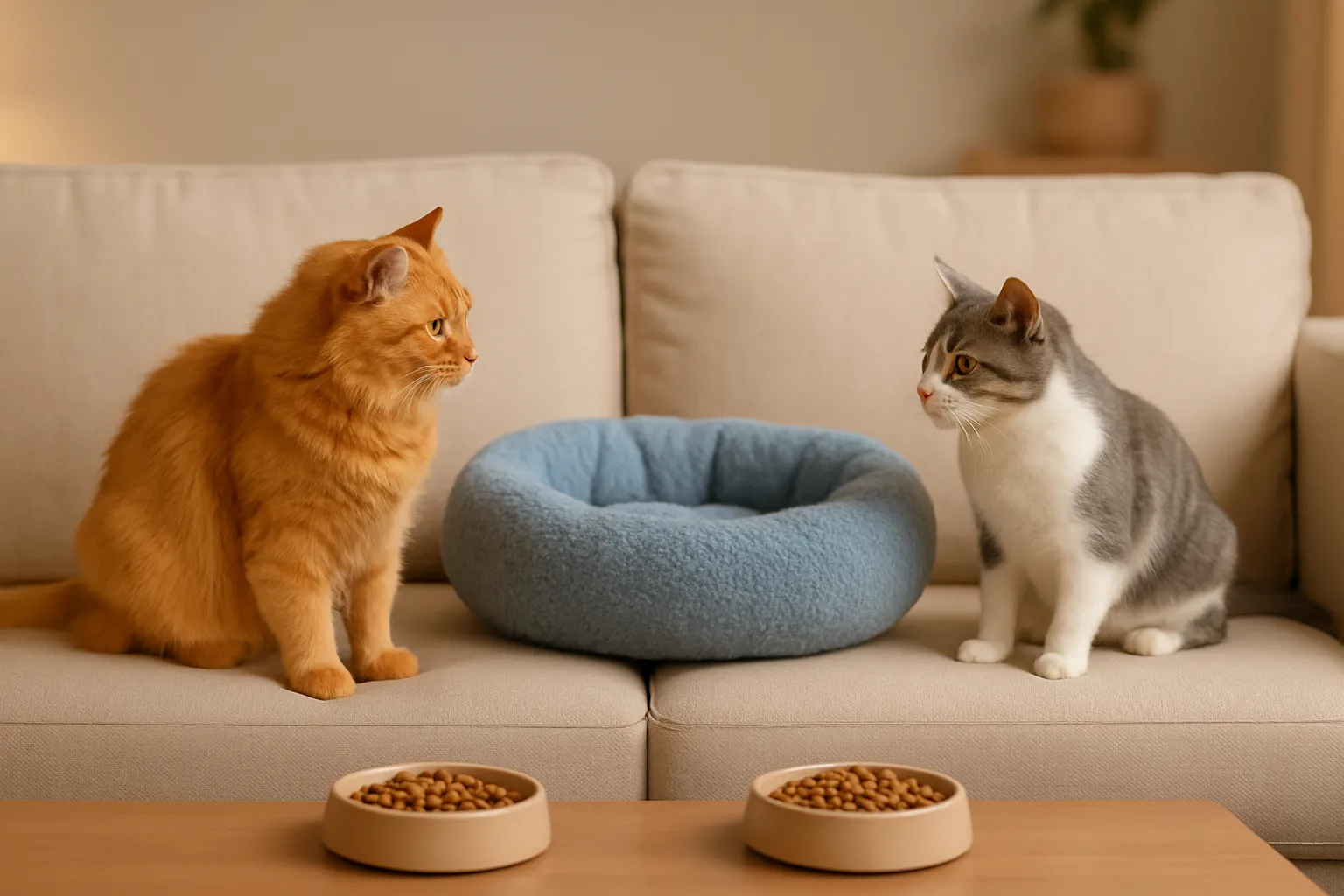
Cats tend to be a little more difficult than dogs to introduce. I usually have the “new” cat in a cat carrier or cat crate to be their “safe space” as they get used to the new environment. From the carrier, they can observe the other cat via sight and smell, and observe what else is going on around the house. Once they seem relaxed (this could take several days), then allow the new cat out to roam but don’t force them anywhere; let them roam and explore on their own. If they retreat to the carrier, it’s okay; just leave the door open so they can go in and out as they need with their comfort level.
Dog-to-Cat introductions:
Cats are generally seen as a “prey” animal by dogs, so careful introduction will be needed. Use the cat carrier to your advantage just like with cat-to-cat introductions if you are bringing a new cat home. If you are bringing a new dog home to an existing cat, then you’ll want to keep a leash on the dog at all times. If your dog shows too much interest in the cat or tries to chase the cat, use the leash to prevent the dog from chasing your cat and redirect your dog to an acceptable behavior. This will take time and may require more intensive training.
Other Animal introductions:
Other types of animals may require other introductions depending on what kind of animal it is. In any case, take your time with the introduction process and ensure that each animal is as comfortable as possible.
 Chad Singer
Founder / Professional Dog Trainer, Canine Revolution Dog Training
Controlled Introductions Build Pet Relationships Gradually
When introducing a new pet to pets already in the home, we always start slow and in a controlled environment. We first let them smell each other through a door or gate before any face-to-face meeting. Initial interactions are brief and closely supervised, with plenty of treats and positive reinforcement. We also make sure each pet has its own space, food, and toys to prevent competition. My advice is to be patient, observe body language carefully, and never force interactions. Taking it step by step helps pets feel comfortable with each other and reduces stress for all of them.
 Omar Malaika
Co-Founder, Soluky pet