
Designing Wedding Pizza Bars: Why They Work, How They Flow, and Why Guests Actually Love Them
Authored by: Scott Kleckner,
Wood-fired pizza has earned a real place in wedding catering—but not because it’s trendy or informal. When it works well, it’s structured, intentional, and highly social. When it doesn’t, it’s usually because pizza is being treated as a novelty instead of a serious food-service format.
After overseeing hundreds of large-scale catered events, including many weddings serving 150–300+ guests, I’ve learned this: the best wedding pizza bars succeed because they combine restaurant-quality food, controlled service flow, and an experience guests genuinely enjoy. That combination takes planning, professional equipment, and disciplined execution—but when it’s done right, it consistently outperforms traditional wedding catering models.
Pizza vs. Traditional Wedding Food
Most wedding food is designed to be safe. Plated meals prioritize timing and predictability; buffets prioritize volume. The result is food that’s usually acceptable, sometimes elegant—but rarely something guests are excited to eat.
Pizza changes that dynamic. Guests don’t eat it because it’s what’s served. They eat it because they want it. They choose their slices. They come back for seconds and thirds. They try multiple varieties intentionally.
At Olive Wood Pizza, where we cater weddings and large-scale events throughout Southern California, this behavior is remarkably consistent. Guests frequently tell us it’s the best pizza they’ve ever had—not because it’s familiar, but because it’s executed without compromise. That outcome isn’t accidental. It’s the result of daily, methodical work on dough, fermentation, ingredients, and process, combined with equipment and service models that don’t force tradeoffs. The goal is simple: bring restaurant-quality pizza to the guest, not a watered-down catering version of it.
At scale, what people voluntarily return for is the clearest signal of success.
Professional Ovens Make Real Choice Possible
One of the biggest differences between professional pizza catering and much of what’s in the market comes down to equipment and crew.
Small, residential-style ovens—or operations relying heavily on pre-made food—force compromises: limited menus, stop-and-start cooking, and quality that drops off as service stretches on. Guests feel it, even if they can’t articulate why.
A professional setup—restaurant-grade wood-fired ovens, experienced crews, and continuous production—changes the equation entirely. At full service, we’re producing five to six pizzas roughly every 90 seconds. Each pizza is cooked, sliced, and served immediately. Nothing sits. Nothing waits.
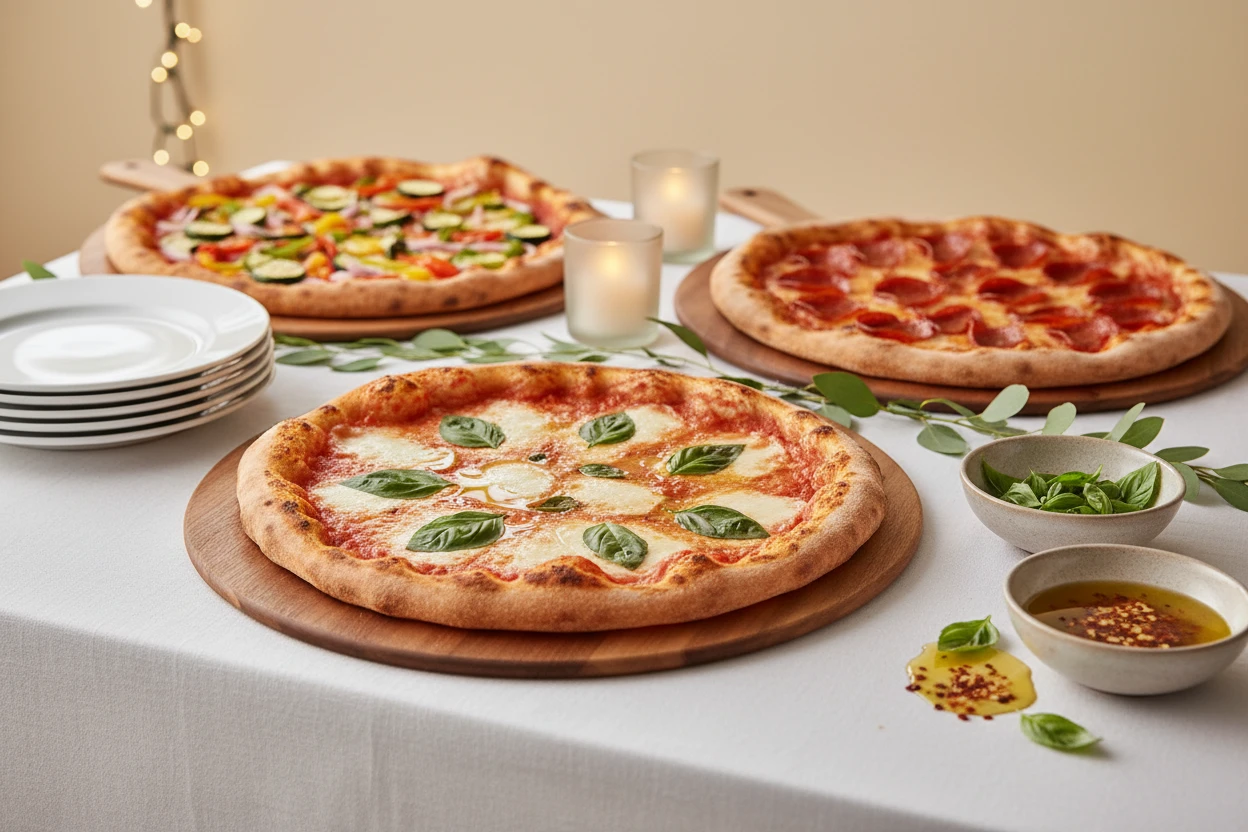
That throughput allows for genuine variety. Guests choose from seven displayed pizzas: three classics like cheese, margherita, and pepperoni, plus four curated specialty pizzas. Because production never pauses, quality stays consistent from the first table released to the last guest coming back for another slice.
The same philosophy applies beyond pizza. Salads and pastas are produced in small batches alongside the ovens—not pre-made hours earlier and held. The standard is restaurant-quality food, cooked fresh on-site, for everyone.
Flow Is What Makes It Feel Effortless
The best wedding pizza bars aren’t casual free-for-alls. They’re structured in a way that respects both the event and the guest experience.
The most effective flow looks like this: guests begin seated at their tables. DJs release tables one at a time for the first wave. Guests with allergies receive personal pizzas made specifically for them. All other guests select from the full pizza lineup, along with salads and other offerings. After the first waves, guests return at will for seconds, thirds, and to try additional varieties.
That structure does two important things. First, it keeps service calm and organized at the start. Second, it creates a sense of abundance afterward. Once the initial rush passes, guests explore freely—eating on their own schedule instead of being bound to a course structure.
Unlike plated meals that anchor guests to their seats, or buffets that create bottlenecks, this model encourages natural movement. People mingle. Conversations overlap. Energy builds instead of stalling between courses.
Why the Vibe Feels Different
Pizza works at weddings because it lowers formality without lowering standards. Guests aren’t waiting for cues to eat, and they aren’t rushed through a preset sequence. They’re engaged, moving, and interacting—often earlier in the evening than with traditional formats.
The downstream effects are noticeable. Dance floors fill sooner. Guests stay energized longer. Complaints disappear. Hosts hear about the food for all the right reasons.
When food is hot, fresh, and continuously available, it fades into the background in the best possible way. Guests stop thinking about logistics and start enjoying the celebration.
The Takeaway
A great wedding pizza bar isn’t about novelty. It works because it solves problems traditional catering hasn’t: food people actively want to eat, service that scales without stress, and a flow that feels social rather than scripted.
When professional crews, real ovens, disciplined menus, and intentional systems come together, pizza becomes more than a meal. It becomes part of the rhythm of the night.
That result is never accidental. It’s designed.
Author Bio: Scott Kleckner, Owner & Operator, Olive Wood Pizza.
Hospitality executive with three decades of experience leading restaurant, catering, and premium event operations across the U.S. and internationally.