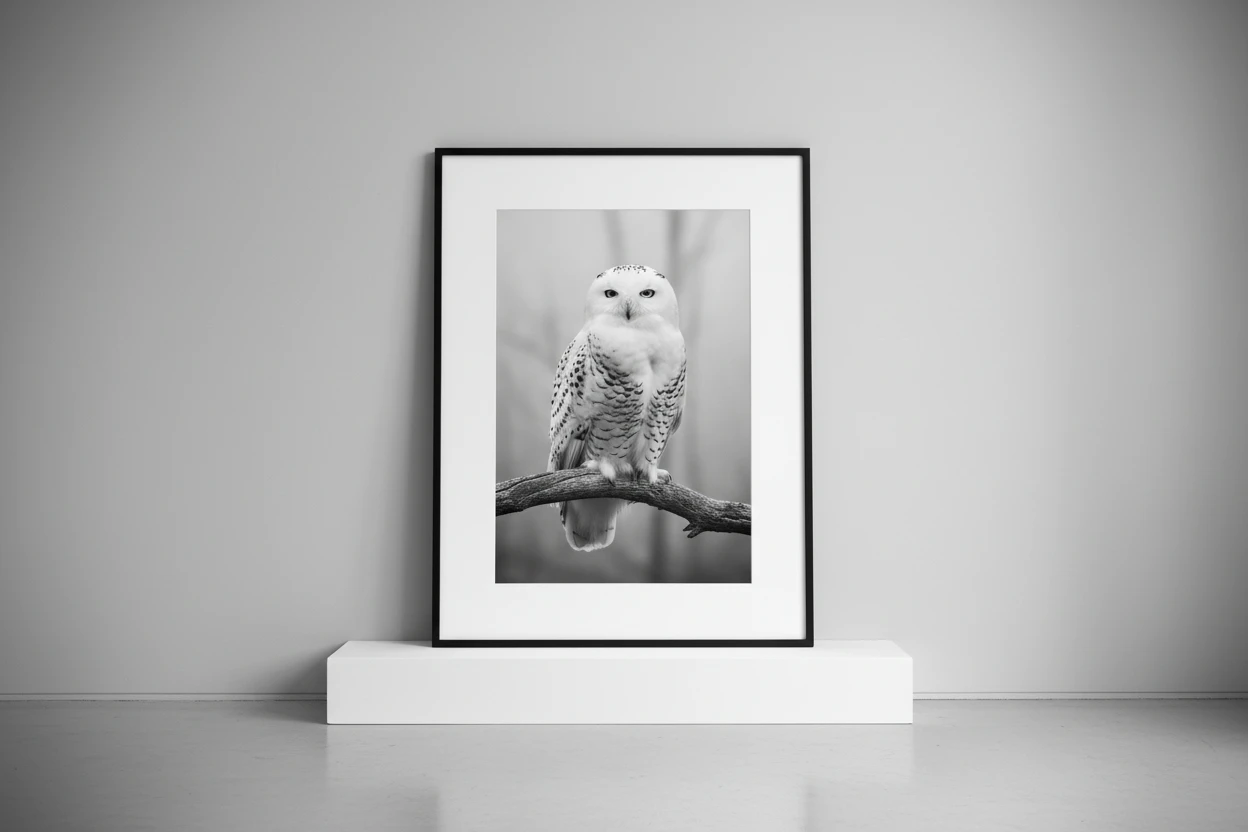
From Field to Gallery: Crafting Black-and-White Wildlife Art
Written by Johan Siggesson
Black-and-white wildlife photography sits at the intersection of art, patience, and storytelling. Without the distraction of color, every element—light, texture, movement, and emotion—has to carry its weight. For me, working in black and white isn’t a stylistic afterthought; it’s a deliberate choice made long before the shutter clicks, often while standing quietly in the field, waiting for a moment that feels timeless.
Transforming a wildlife encounter into gallery-ready black-and-white art requires more than technical skill. It demands intention from capture to print, and a deep respect for both the subject and its environment.
Seeing in Black and White Before You Shoot
One of the most common misconceptions about black-and-white photography is that it’s something you “fix” in post-processing. In reality, the strongest black-and-white wildlife images begin with visualization in the field.
When I’m photographing wildlife, I pay close attention to contrast rather than color—how light falls across fur or feathers, how mist separates a subject from its background, or how negative space can amplify isolation and scale. Overcast conditions, often dismissed by color photographers, are ideal for black-and-white work. Soft light reveals texture without harsh shadows, allowing the animal’s form and expression to dominate the frame.
Takeaway: If a scene relies heavily on color to be interesting, it likely won’t translate well to black and white. Look for shape, light, and emotion first.
Patience Creates Presence
Wildlife art isn’t about collecting sightings—it’s about creating connection. Some of my most meaningful images came from hours of stillness rather than constant movement. Spending time in one location allows animals to behave naturally, and that authenticity is visible in the final image.
In black-and-white photography especially, subtle gestures matter: the tilt of a head, the tension in muscles before motion, or a moment of stillness amid chaos. These are the details that turn a photograph into artwork suitable for gallery walls.
Example from experience: While photographing wildlife in remote landscapes, I’ve often waited through entire lighting cycles just to capture a single expression that conveyed calm or alertness. Those are the images collectors respond to most.
Editing for Mood, Not Drama
Post-processing is where restraint becomes essential. The goal isn’t to make an image look “dramatic” at all costs, but to support the story already present. I focus on tonal balance, ensuring blacks are rich without losing detail and highlights remain soft and intentional.
Dodging and burning—done subtly—helps guide the viewer’s eye through the frame. Texture should feel tactile, not exaggerated. A successful black-and-white wildlife print invites viewers to linger, not overwhelms them.
Takeaway: If editing draws attention to itself, it’s gone too far. The animal and the moment should always lead.
Preparing an Image for the Gallery Wall
Gallery-ready work is as much about presentation as it is about capture. Print quality, paper choice, and sizing dramatically affect how an image is perceived. I favor fine-art papers that enhance tonal depth and preserve detail, especially in shadow areas.
Equally important is consistency. A cohesive body of work—unified by style, mood, and subject—creates a stronger impact than standalone images. Galleries and collectors are drawn to photographers who demonstrate a clear artistic voice.
Why Black and White Endures
Black-and-white wildlife art has a quiet longevity. It transcends trends and fits seamlessly into modern spaces because it emphasizes form, emotion, and story over spectacle. More importantly, it encourages viewers to engage with wildlife not as decoration, but as presence.
For me, every image is an invitation to slow down and observe—to recognize the fragile beauty of the natural world and our responsibility to protect it.
Author
Johan Siggesson is a traveling expert, wildlife photographer, and the owner of Johan Siggesson Photography. His work focuses on capturing the raw beauty of wildlife and natural landscapes, translating fleeting moments in the wild into timeless fine-art images.
🌍 https://www.johansiggesson.com